
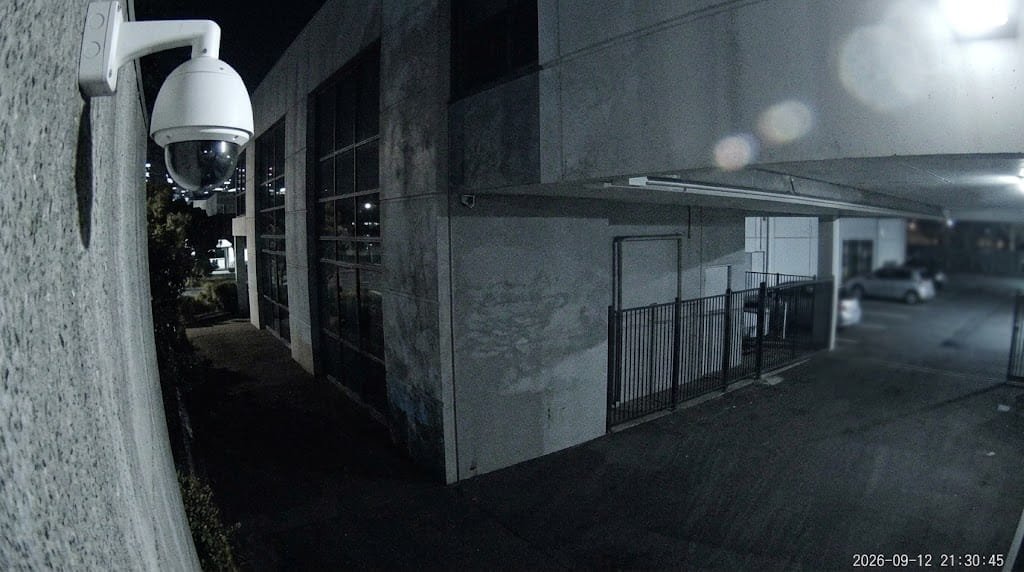
Start with the risk, not a product
For businesses experiencing poor after-hours footage, the most useful starting point is a clear description of the property, people, assets, operating hours and events that could cause harm or disruption. In this context, night performance is shaped by lighting, reflections, camera position, lens choice, exposure, distance and maintenance rather than an infrared specification alone. A provider should therefore ask practical questions before recommending staff, equipment or a contract. The aim is not to make a site appear heavily protected. It is to place proportionate controls where they reduce a defined risk and to make sure somebody knows what to do when an exception occurs.
A walkthrough should identify public and staff entrances, vehicle routes, isolated areas, valuable stock or equipment, opening and closing routines, existing camera or alarm coverage, and the people authorised to make decisions. It should also record known incidents without assuming the last incident predicts every future one. This creates a defensible brief for CCTV night vision problems and helps buyers compare proposals on the same basis.
1. Plan for available light and scene contrast
Available light and scene contrast should be translated into specific duties or system outcomes. State where coverage begins and ends, which hours matter, what normal activity looks like and which situations require escalation. Vague instructions such as “keep the property safe” leave too much room for different interpretations. A better brief identifies the checks to complete, the information to record, the people to contact and any action that must wait for police, emergency services, management or another authorised party.
The plan should account for Auckland conditions at the actual location rather than using a generic national template. Traffic, neighbouring activity, shared access, after-hours work and response travel can affect what is realistic. If circumstances change, the provider and customer should revise the site instructions instead of expecting the original arrangement to cover a materially different risk.
2. Define infrared reflection and obstructions
When considering infrared reflection and obstructions, distinguish a desired result from the method used to achieve it. The result might be controlled entry, faster awareness, a visible presence, a reliable record, safer staff procedures or a coordinated response. Different combinations of guards, mobile patrols, CCTV, alarms and access control may achieve that result. The correct mix depends on the site and should not be chosen because one technology is fashionable.
Record who owns each part of the process. The customer may manage staff permissions and keyholders; a guard may complete patrols and reports; an installer may maintain devices; and a monitoring partner may receive selected signals. Naming those responsibilities prevents a common failure in which every component is present but nobody is clearly responsible for reviewing an alert, approving access or closing an identified fault.
3. Build clear procedures around camera angle, distance and identification needs
Camera angle, distance and identification needs works best with written procedures. Procedures should be short enough to use under pressure and detailed enough to distinguish routine activity from an incident. Include contact priorities, unavailable-contact contingencies, emergency thresholds and the records required after an event. Where a monitoring service is involved, the customer’s agreed response plan determines the escalation. Professional monitoring is not the same as promising that every camera is continuously watched or that a guard will automatically be dispatched.
Test the procedure during normal operations. Confirm that contact numbers are current, nominated people understand their role, relevant doors and devices can be identified, and the provider has accurate site information. Testing often exposes simple problems—an obsolete keyholder, a renamed tenancy, a changed gate code or an unreported building alteration—before they affect a genuine response.
4. Make settings, lenses and supplementary lighting useful
Settings, lenses and supplementary lighting should produce information the customer can act on. Agree the expected format, delivery time and level of detail. Records should separate observed facts from opinions, note actions and notifications, and handle personal information carefully. Reports do not need dramatic language. They need enough accurate context for the customer to investigate, meet internal obligations and decide whether a procedure, staffing level or system setting should change.
Patterns are often more valuable than isolated entries. Repeated door faults, activity at the same time, recurring false alarms or repeated unauthorised access attempts can justify a targeted change. A monthly or agreed review can group these observations, identify open actions and confirm ownership. This turns security from a collection of reactions into a manageable improvement process.
5. Review cleaning, testing and seasonal review
Cleaning, testing and seasonal review should be reviewed against actual performance and changing operations. A new tenant, construction phase, delivery route, event format, stock profile or staffing pattern may create different vulnerabilities. Review after a significant incident, after material site changes and at an agreed interval. The review should ask whether the risk has changed, whether controls still work and whether response instructions remain realistic.
Maintenance belongs in this review. Cameras can lose focus or coverage, batteries can deteriorate, access permissions can remain active after staff leave, and physical damage can interrupt power or data. Guards also need current instructions and induction. A layered plan is only dependable when its individual parts are checked and defects are assigned for correction.
Licensing, privacy and safety checks
Ask the provider to confirm the licence or Certificate of Approval requirements that apply to the work and verify current details through the appropriate New Zealand register. Do not rely on loose phrases such as “certified security” without understanding what is licensed. PC Data & Security has confirmed that its guards are appropriately licensed for the work they perform; exact company licence numbers and classes should only be published after the supporting documents and approved wording are available.
CCTV, access logs, visitor records and incident reports can contain personal information. Collection should have a genuine purpose, access should be limited, retention should be considered, and people should receive appropriate notice. Audio recording is generally more intrusive and needs particular care. This article is practical planning information, not legal advice; organisations should obtain specialist advice where their obligations or proposed use is uncertain.
Questions to put in the service brief
Before approving CCTV night vision problems, ask: What exact risk is the service addressing? Which areas and hours are included? What is excluded? Who supervises delivery? How are urgent gaps handled? What reports will we receive? Who maintains related equipment? What happens after an alarm or camera event? Which keyholders are contacted? Are response services subject to location and availability? What contract terms may apply? How will privacy, health and safety, and site-specific rules be reflected?
Also ask how changes are authorised and priced. A proposal should distinguish regular coverage from additional call-outs, special events, extra guards, equipment, monitoring, repairs and formal design work. PC Data & Security generally offers free initial assessments for Auckland commercial security requirements, while large design exercises, formal tenders and locations significantly outside Auckland are assessed individually before free work is confirmed.
A practical implementation sequence
First, document the current position and immediate vulnerabilities. Second, agree priorities and the acceptable response for each significant scenario. Third, specify people, technology and physical measures with named owners. Fourth, create site instructions and escalation contacts. Fifth, install or mobilise the agreed controls and test them. Sixth, train affected staff and confirm reporting. Finally, review results and correct gaps. This sequence is more reliable than purchasing equipment or guard hours before the operating plan exists.
For PC Data & Security, the commercial advantage is coordination: the business can provide physical security personnel alongside CCTV, alarms, access control, electrical and data capability. That does not mean every customer needs every service. It means a site can be assessed as one operating environment, with interfaces between available light and scene contrast, infrared reflection and obstructions, camera angle, distance and identification needs, settings, lenses and supplementary lighting and cleaning, testing and seasonal review considered rather than left between unrelated suppliers.
Frequently asked questions
Is there one standard package for CCTV night vision problems? No. Scope should reflect the site, hours, duties, equipment, risk and response plan. A standard label can hide important differences.
Can PC Data & Security assess an existing system installed by another company? Yes, it can assess third-party systems and may take over compatible monitoring or maintenance, subject to equipment compatibility and the agreed service.
Is professional monitoring available 24/7? PC Data & Security has confirmed that alarm and CCTV monitoring can be provided 24/7 through monitoring partners. Escalation follows the customer’s agreed response plan, and security response is arranged where applicable.
Is guard response guaranteed everywhere? No. Guard response can be provided in Auckland subject to location and availability. The proposal and response plan should state what applies to the specific customer.
Are initial assessments free? They can generally be offered for Auckland commercial guarding, CCTV, alarms, access control, construction and related property requirements. Formal tenders, large design exercises and significantly out-of-area work are assessed individually.
Request a site-specific assessment
A useful CCTV night vision problems proposal should make the service understandable: the risks addressed, coverage provided, exclusions, responsibilities, escalation, reporting, maintenance and price basis. PC Data & Security can assess the current arrangements and recommend a proportionate combination of guards and electronic security for the property. Contact James Pule, Director, on 021 225 2948 to discuss an initial assessment and tailored quote.
